

 English
 Français
 Deutsch
 Italiano
 Русский
 Español
 简体中文
简体中文 हिन्दी
 日本語
日本語

Key Points
- Placing toilets, showers, and sinks too far away from the main drain stack causes clogs in the future.
- The drain stack is the main vertical pipe, and water should reach it quickly and drain downward.
- Fixtures too far from the main drain stack cause slow drainage and clogs because water loses velocity.
A bathroom remodel, when done right, can solve many problems. You can improve your bathroom’s style, usability, storage, and more. But when done improperly, it might cause headaches (and expensive plumbing repairs) down the line that require cutting into the wall.
There’s one mistake plumbers say they see over and over that will cause more clogs than convenience in the future. Here’s the number one layout mistake you could make while renovating your bathroom—and what to opt for instead.
Meet the Expert
- Jimmy Hiller is a plumbing expert and the CEO of Happy Hiller plumbing, cooling, heating, and electrical.
- Shaylin King is a licensed plumber and owner of Mr. Rooter Plumbing of Tri-Cities, Yakima, and Hermiston.
- Robert Schwachenwald is a plumbing expert and the owner of Bizzy Bee Plumbing Inc.
The Biggest Bathroom Layout Mistake
Elliott Kaufman / Getty Images
Plumbers agree that the number-one bathroom layout mistake that leads to future problems is placing toilets, showers, and sinks too far away from the main drain stack when determining fixture placement.
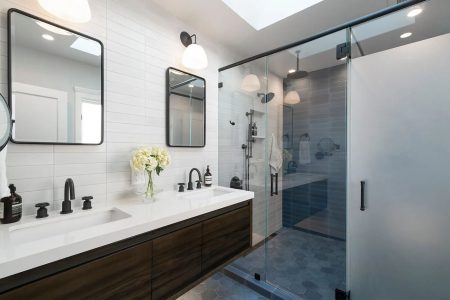
The drain stack is the vertical pipe in the drainage system that the various drain lines tie into. For example, the drain stack in the image above is likely behind the wall with the mirrored medicine cabinet.
Jimmy Hiller, CEO of Happy Hiller, says that fixtures placed too far from the main drain stack can cause issues, even if all the plumbing is installed according to code.
Don’t Miss
Why Layout Mistakes Lead to Clogs
imageBROKER/Perry Mastrovito / Getty Images
Shaylin King, owner of Mr. Rooter Plumbing of Tri-Cities, Yakima, and Hermiston, says ignoring the location of the main drain stack can cause slow drainage caused by long drain runs.
“Fixtures too far from the main drain or stack can also increase the likelihood of clogs because water loses velocity,” he explains, adding that fixtures positioned too far from the main drain or stack can also be harder to properly vent, which can result in gurgling and even sewer smells.
You want the water to drain down vertically into the main stack as quickly as possible.
“The longer the horizontal drain run is, the more likely water slows down, and hair and soap start settling in the pipe,” Hiller eplains. “Months later, people start noticing slow drains and frequent clogs that can be completely solved only by opening the floor, walls, and changing the drain layout.”
How to Prevent Future Plumbing Issues
To prevent future plumbing issues when relocating bathroom fixtures during a renovation, King recommends homeowners adhere to these precautions:
- Keep the toilet drain as short as possible. He recommends installing toilets no further than 6 feet from the soil stack. When in doubt, check your local residential codes or consult a licensed plumber.
- Follow local code for maximum drain length per pipe size. If you’re unsure of your ability to accurately interpret local codes and choose properly sized pipes, King recommends hiring a professional plumber who understands the work required to meet code standards.
- Add proper venting or reroute pipework. “Ensure every fixture is vented, install air admittance valves where allowed, and don’t cap or remove vent pipes during renovations,” he adds.
Follow Us On
Other Bathroom Renovation Mistakes to Avoid
To ensure your bathroom renovation goes off without a hitch, here are other common bathroom renovation mistakes to avoid:
- Installing a floating vanity without ample support. Robert Schwachenwald, owner of Bizzy Bee Plumbing Inc., says he often sees homeowners choose floating vanities without verifying if the wall can support them. He recommends choosing a vanity before the wall is closed and reinforcing the studs or adding structural mounting points if necessary.
- Installing a low-profile shower without enough vertical space beneath it. “Low-profile showers can cause drainage problems if the floor doesn’t have enough vertical space for proper slope and a full trap,” explains Hiller. “If it gets flattened to make it fit, it won’t drain properly.”
- Placing pipes in exterior walls or unheated spaces. Hiller says installing pipes in areas that can freeze without insulation is a common renovation mistake.
Read the full article here