

 English
 Français
 Deutsch
 Italiano
 Русский
 Español
 简体中文
简体中文 हिन्दी
 日本語
日本語
Key Points
- You can plant trees near or under power lines. Keep in mind the tree’s mature height.
- Follow local easement regulations and distance requirements from power lines.
- Problems arise when trees interfere with power lines, but professional pruning can correct this.
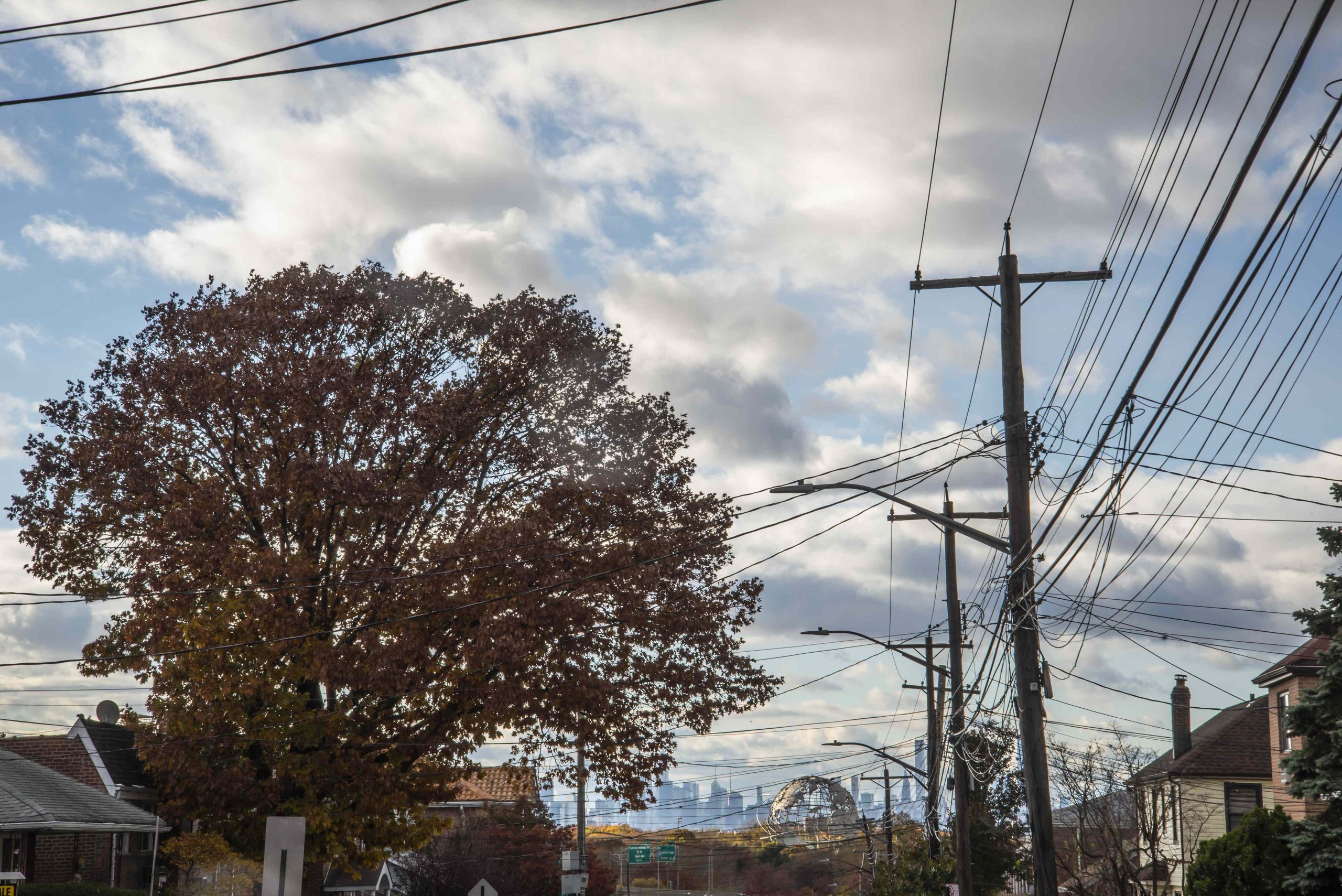
In winter when tree limbs become heavy with ice and snow and the weather can be especially windy, tree placement is often on people’s minds. But no matter the weather—it could be a summer thunderstorm—if a tree falls on a power line, it’s not good. It’s possible to plant trees near power lines, but it requires careful planning.
Poor placement can damage the tree or even lead to its removal. When trees encroach on power lines, safety concerns will likely prompt the utility company to intervene and prune the tree.
To learn about planting trees near power lines and the important considerations for doing so, we spoke with arborists and landscaping experts.
Meet the Expert
- Jack Hamer is the Managing Director of Silvermere Landscapes in the United Kingdom.
- Peter Lowe is the Garden Program Manager at The Dawes Arboretum, a nonprofit based in Newark, Ohio.
- Scott Seargeant is the owner of Seargeant Landscape & Arboriculture based in Visalia, California.
Planting Trees Near Power Lines
KathrynHatashitaLee / Getty Images
Experts agree that you technically can plant trees near or under power lines, but they emphasize that the trees’ eventual mature size, not their current size, should be considered.
“A tree that seems manageable now can easily become a problem once it reaches full size,” Jack Hamer, an arborist and the Managing Director of Silvermere Landscapes, says.
In addition, several caveats regarding legality, tree size, location, and species can affect where and whether the tree can be planted.
Don’t Miss
Legal Considerations
Your local authorities have the final say on whether you can plant trees near power lines. Homeowners should check with their city, county, or state government, as well as with the power company.
Easements also affect tree placement. An easement is a right-of-way that allows utility companies to do what they want with your tree, as Peter Lowe, Garden Program Manager at The Dawes Arboretum explains.
“Easements can lead to poor pruning by the power company,” he adds. “This may be detrimental to the tree’s health, create structural issues, or even necessitate removal of the tree.”
Tree Size and Location
Careful consideration is necessary when placing a tree near power lines. Problems tend to appear years later, when the tree matures and begins to encroach on the lines, says Hamer.
“I tell people to look up, look down, and look all around before they decide on a location to plant a tree,” says Scott Seargeant, owner of Seargeant Landscape & Arboriculture.
Height
At maturity, trees must not exceed 75% of the height of the lowest power line, Seargeant says.
To provide as much clearance as possible, Lowe recommends a maximum height of 15 feet and, if it’s the only option, up to 20 feet.
Width
Trees planted near power lines are often property line trees. So, you’ll want to account for the canopy’s width by several feet to stay clear of the power lines and to be respectful of your neighbor’s property.
Distance From Power Line
Trees should be planted at least 40 to 50 feet from the power line, according to Lowe.
To be on the safe side, Dave Sheridan, owner of Ascension Tree Care in Milford, Michigan, suggests using the property line rather than the power line as the measuring point. If the trees are located on or near the property line, pruning is more difficult, especially if they need frequent pruning.
Tree Species
Aaron McCoy
Plant small to medium-sized trees to help guide sizing. As a general rule, Hamer suggests sticking with smaller ornamental trees or slow-growing species. The best trees to plant near power lines:
- American Fringetree
- American Hornbeam
- Crape Myrtles
- Dogwoods
- Eastern Redbud
- Flowering Dogwood
- Magnolia
- Red Buckeye
- Redbuds
- Serviceberry
Pruning
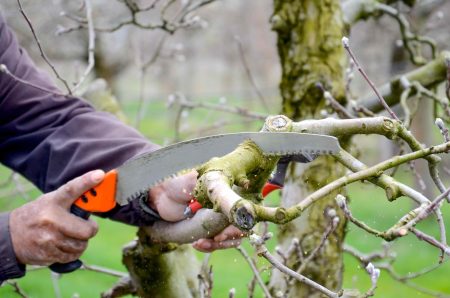
Rather than relying solely on the tree’s natural size limits, the experts recommend careful pruning to restrict its size and preserve its aesthetic integrity.
Follow Us On
Google
“Plants are more resilient to pruning than people may think, as long as it is done correctly,” Lowe says.
- Prune regularly: Hire a local certified arborist to trim the trees on a regular schedule, Sheridan advises.
- Leave difficult pruning to the utility company: “Working too close to live cables is dangerous, and any work near them should be carried out by qualified professionals,” Hamer adds.
- Avoid topping: Avoid topping the tree, or removing the majority of the leafy canopy, a method that Sheridan calls a “slow death sentence for the tree.”
- Reduce the crown: Crown reduction is a selective pruning technique that lowers the height by cutting back to lateral, or side, branches.
- Prune in winter: Winter is always the ideal time to prune, so the tree has time to heal the wounded areas, Lowe says.
- Prune with a purpose: You should also prune to achieve goals such as better flowering, better fruit, to correct damage, or to correct poor growth, according to Lowe.
Read the full article here