
 English
 Français
 Deutsch
 Italiano
 Русский
 Español
 简体中文
简体中文 हिन्दी
 日本語
日本語
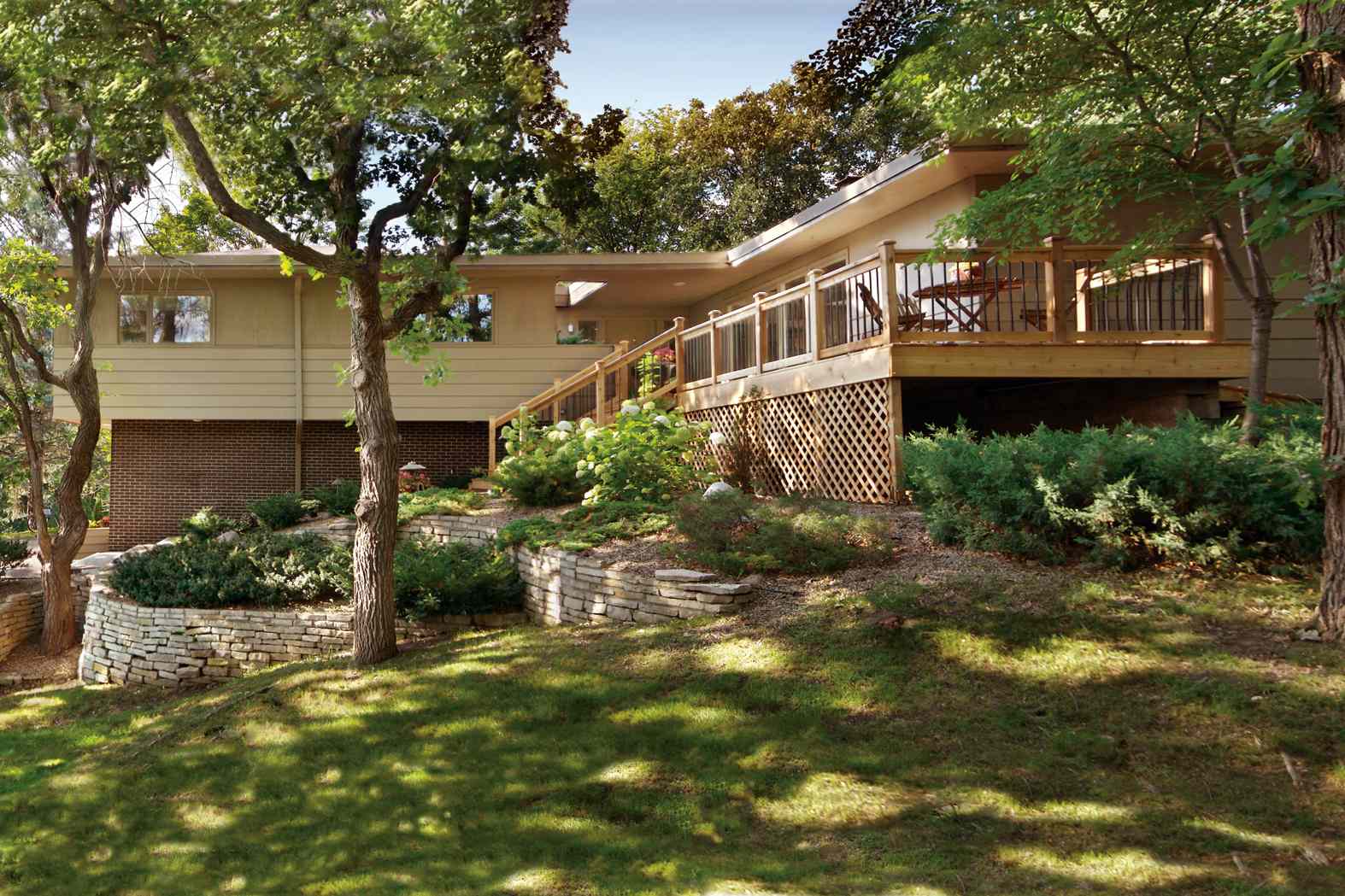
If you took a stroll through a suburban yard in the 1960s or 1970s, you might have seen gravel hardscaping details, girthy planters of herbs, brick details with bullnose coping, and species like hydrangea, delphinium, or lilac. As it turns out, that’s not so different from the yards trends dominating 2026, where trading minimalism for texture is the name of the game.
We spoke with three gardeners, landscapers, and design experts about retro yard trends making a comeback in 2026.
Meet the Expert
- Kristen Kelly is a landscape designer at Hicks Landscapes in Westbury, New York.
- Molly Sedlacek is the founder and principal of ORCA Landscape Architecture + Outdoor Product Studio in Seattle.
- Bill Ferris is the president of Decor Outdoor, an online patio furniture retailer.
-
01
of 10Gravel Courtyards
Credit: Clive Nichols / Getty Images
Popular in midcentury and Mediterranean-inspired homes, gravel courtyards are inexpensive and easy to install. They also offer practical, low-key hardscaping that lets other parts of the courtyard shine.
“Gravel and decomposed granite courtyards, typical in Mediterranean homes, now attract homeowners for their texture and low water use,” Bill Ferris, the president of Decor Outdoor, says.
As water conservation is a priority more than ever, homeowners are discovering sustainable hardscaping options like gravel and decomposed granite.
Don’t Miss
-
02
of 10Stones Instead of Cement
Credit: kampee patisena / Getty Images
Smooth, featureless concrete pathways may be easy to maintain, but they have little personality and lack elements that catch the eye.
“People are missing the character and beautiful aging that comes with permeable, sand-set materials versus solid surfaces like concrete that don’t look great once they crack,” Molly Sedlacek of ORCA Landscape Architecture + Outdoor Product Studio says.
-
03
of 10Conversation Pits
Credit: Guoshen He / Getty Images
Indoor conversation pits from the 1960s and 1970s have migrated outdoors, and with a fresh look.
“The sunken conversation pit from the 1960s and 1970s is also re-emerging with cleaner lines and fire features,” Ferris says.
Today’s outdoor conversation pits incorporate weather-resistant built-in seating and upholstery, along with subtle low-voltage lighting, to create a cozy gathering space.
-
04
of 10Wicker Furniture
Credit: Shippee / Getty Images
The 1970s represented a longing for nature and the organic. That ethos is popular once again with the incorporation of natural materials like wicker, landscape designer Kristen Kelly says.
To enliven the wicker, add pillows for pops of color. Set the wicker chairs and tables on a patio or lanai graced by textured rugs and warm wood accents, for an overall relaxed aesthetic.
Continue to 5 of 10 below -
05
of 10Potted Herbs
Credit: Fabio Orlando Bernardini / 500px / Getty Images
Potted herbs are a nostalgic detail making a comeback in 2026. In the 1960s and 1970s, pots of basil, rosemary, and mint were found on sunny back patios, ledges, and alongside stairs. For easy access when cooking, they were often placed outside, near the kitchen.
Potted herbs make patios feel fresh, easygoing, and organic. The result is a nod to the past, yet infused with modern sensibilities and practicality.
-
06
of 10Old-School Plants for Privacy
Credit: coldsnowstorm / Getty Images
Recently, there has been a return to old-school plants like lilac and camellia, and to perennials like delphinium, but in very intentional ways, Kelly says.
“I love older cultivars like Hydrangea ‘Tardiva’ or layering Magnolia grandiflora into a privacy hedge,” she says. “These plants provide structure and texture, and they instantly create a landscape that feels like it’s always been there.”
-
07
of 10Brick Decor
Credit: beekeepx / Getty Images
In the 1970s, brick saw a renewed appreciation as part of a broader movement toward adapting old houses and commercial buildings for residential use. Exposed brick symbolized craftsmanship and authenticity.
“We’re noticing that brick is being used in planters, benches, and outdoor kitchens, making gardens feel monolithic,” Sedlacek says.
The variety of colors and textures in brick offers greater design versatility in the garden as well.
-
08
of 10Individual Outdoor Furniture
Credit: Emilia Vilculescu / 500px / Getty Images
Modular outdoor seating sets that feel like a sectional outdoors are losing ground. Replacing these are intentional arrangements of individual outdoor seating and tables. This trend rejects rigidity in favor of free-form seating that doesn’t box users in and force them into prescribed spots.
“People are choosing comfort over that curated look, so you’ll find more individual pieces that actually make the space feel more luxurious,” Kelly says.
Continue to 9 of 10 below -
09
of 10Euro-Style Gardens
Credit: Erik Hovmiller Photography / Getty Images
Symmetrical, orderly gardens with clipped boxwood hedges were admired in the 1960s and 1970s, as these old-world influences enlivened flat, often bland, suburban yards and lawns.
“Structured European-style gardens with hedges and symmetry are making a comeback, and in some cases, replacing an era of minimalist landscaping,” Ferris says.
-
10
of 10Bullnose Coping
Credit: David Papazian / Getty Images
Smooth, rounded bullnose coping framed walls, stairs, and planters in backyards of the 1960s and 1970s. Bullnose’s curved profile softens hard, linear edges often found in brickwork and concrete.
Bullnose profiles are a fast track to a sense of integrity and attention to detail, giving modest backyard hardcaping a polished, architectural look.
Read the full article here